Moving More
Tick Talk: How to Keep Yourself Safe from Ticks

Time spent hiking, camping, gardening, and enjoying the outdoors in Manitoba can be wonderful, but it also means tick season. Ticks are active whenever there is no snow on the ground. Rainfall and hot temperatures can lead to increased tick activity.
Blacklegged ticks (also known as deer ticks) can carry diseases such as Lyme disease, anaplasmosis, and babesiosis. Fortunately, a few simple precautions before, during, and after spending time outside can greatly reduce your risk of tick bites.
Preventing tick bites (before you go)
- Wear closed-toed shoes, light-coloured pants and a long sleeve shirt. Light-coloured clothing make it easier to see ticks.
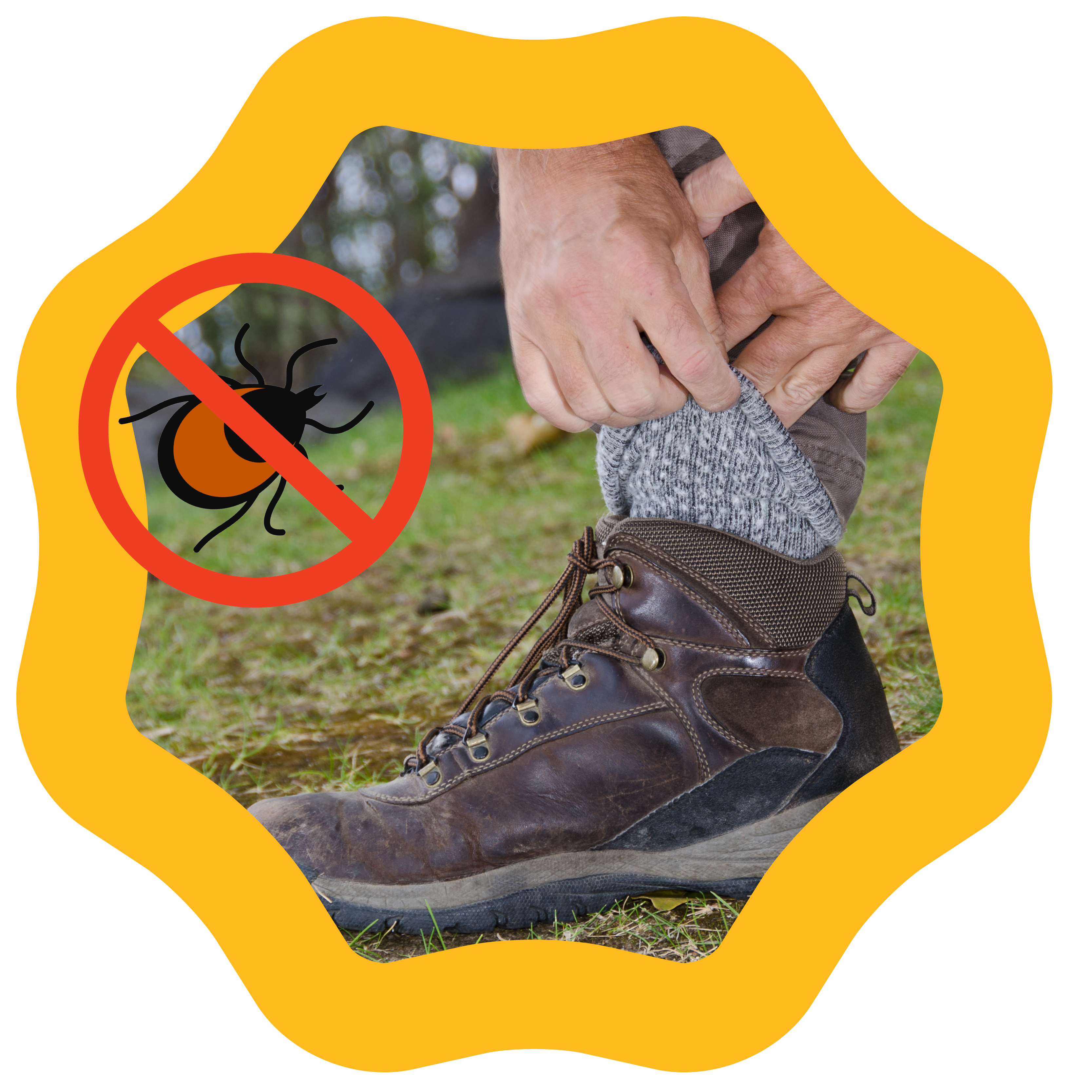
- Tuck your shirt into your pants and pull your socks over your pant legs.
- Walk on cleared paths or trails when possible. Stay to the centre of paths or trails, avoiding long grass and vegetation.
Choosing an Insect Repellent:
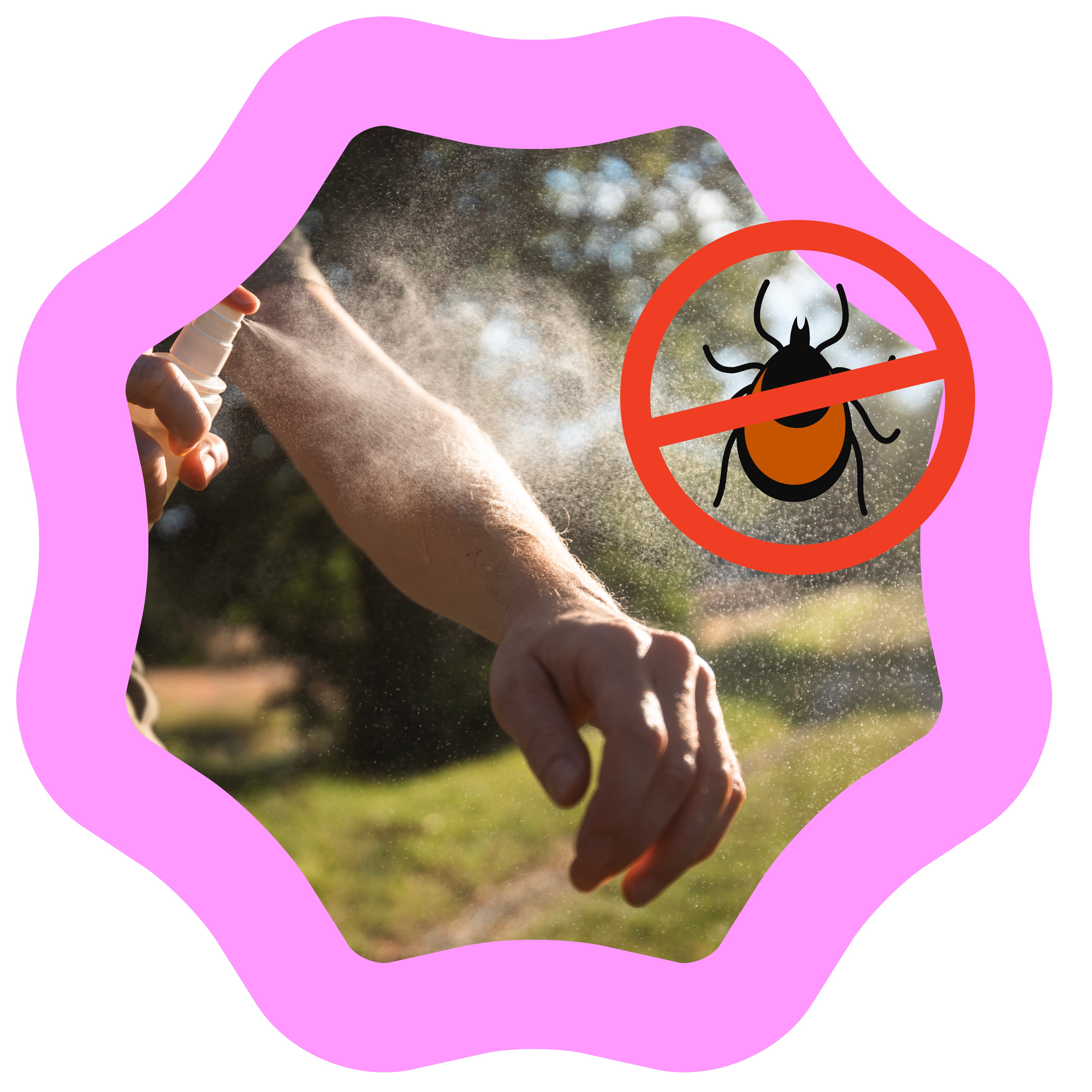
- Use insect repellent containing DEET or icaridin on exposed skin and clothing
Choosing the right DEET concentration:
- Adults and children over 12 years: up to 30% (follow the product label on how often to apply)
- Children 2 – 12 years: up to 10% (use up to three applications a day)
- Children 6 months – 2 years: up to 10% (use no more than once a day)
- Do not use on infants younger than 6 months.
Icaridin:
- Follow the manufacturer’s age recommendation (cannot be used on infants younger than 6 months) and application instructions.
For more information, please visit Insect repellent and consider using permethrin-treated clothing if you are spending an extended amount of time in tick territory.
How to check yourself (once you come indoors during spring, summer and fall)
Ticks can come in many different sizes! Keep a keen eye; do not stop after finding just one; many uninvited guests may be hiding on you and your clothes.
Check yourself and your family for ticks and remove any ticks right away. Check the whole body, and specifically check the following areas:
- Hair and hairline
- In and around the ears
- Back of neck and back
- Armpits
- Elbows
- Waistline and belly button
- Groin
- Back of Knees
- Feet, including between toes
Have a shower shortly after returning indoors; this can help you find ticks and may also help wash off unattached ticks. Check any outdoor gear for ticks, such as backpacks. Put outdoor clothing in your dryer on high heat for at least 10 minutes.
Check any pets as well. Pets cannot transmit tick-borne illness to humans, but ticks can enter your home via pets.
What to do if you are bitten? (how to remove a tick)
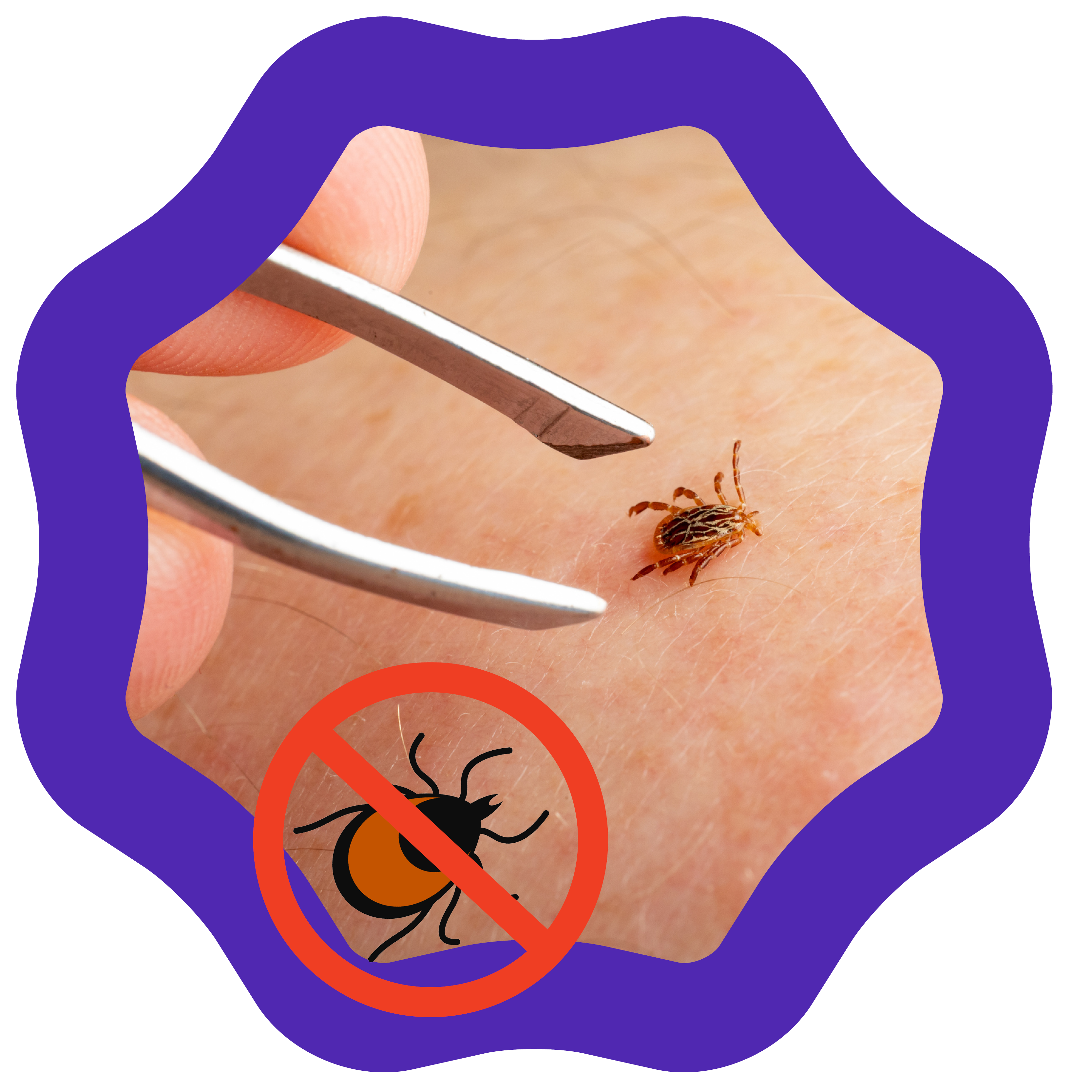
It is important to try to remove the whole tick. Use clean tweezers for best results and have soap and water handy or a disinfectant.
Grab the tick at the head, as close to the skin as possible. Pull slowly and gently straight outwards. Be careful not to twist or squeeze the tick. If any pieces remain, do not dig in your skin to retrieve small pieces left behind, these will naturally be pushed out (much like a sliver).
Once removed, wash the area and your hands with soap and water or an alcohol-based sanitizer. Watch this video for reference.
Due to the health risk they pose, it is important to distinguish between blacklegged ticks and the more common wood tick. See this webpage for pictures and examples. Manitobans who find a tick can submit a picture to have it identified by experts to confirm whether it belongs to a species capable of transmitting disease.
For more information or to submit a picture of a tick, visit www.etick.ca.
Write down the date and the body area of the bite. This can greatly help your doctor if you end up experiencing any symptoms. You should monitor yourself for any signs of illness in the months following a tick bite.
Public health doctors recommend visiting a health-care provider within 72 hours of removing a tick to receive preventive treatment for Lyme disease if:
- The bite was from a reliably identified blacklegged tick.
- The tick was attached for 36 hours or more, or was engorged (filled with blood).
- The tick was from a location in southern Manitoba (south of the 53rd parallel), or another known risk area outside of Manitoba for Lyme disease (map of Lyme disease risk areas in Canada).
When should you see your doctor
Early identification of Lyme disease or other tick-borne diseases is important for effective treatment. Symptoms can occur within a few days to about a month after a bite. Exact symptoms may vary, but talk to your doctor immediately if you are experiencing any of the following symptoms:
- Rash
- The rash associated with Lyme disease is an expanding skin rash that usually starts at the site of the tick bite. The rash may appear at more than one site.
- Fever
- Chills
- Headache
- Fatigue
- Muscle and/or joint(s) aches or pain
- Swollen lymph nodes
More severe symptoms can include:
- Severe headache
- Confusion
- Facial paralysis (such as Bell’s Palsy – drooping of one or both sides of the face)
- Irregular Heartbeat
Whether you’re heading to the cabin, exploring a trail, or simply enjoying your backyard, a few simple precautions can dramatically reduce your risk of tick bites. Awareness, prevention, and prompt tick removal remain the most effective tools for keeping Manitoba families safe while enjoying the outdoors.
To learn more about tick-borne disease, prevention and treatment, visit Tick-Bourne Diseases from Manitoba Health.
For more information:
Prevention of Tick-Borne Diseases | Government of Manitoba
How to prevent tick bites | Health Canada
Tick Prevention | Tick Talk Canada
Ticks in Canada | Health Canada
Filter By
Sort By

Reducing stress
Help for your biggest back to school concerns
Moving More
Tick Talk: How to Keep Yourself Safe from Ticks
Moving More
Why you should choose an active commute
Moving More
5 things to know about choosing sunscreen
Moving More
Winter Doesn’t Have to Be a Write-Off
Moving More
WinterToba Wellness
Community
Winter Adventures with Annie
Catch up on immunizations
Protecting Babies from RSV
Catch up on immunizations
Why Getting Your Flu Shot Matters
Moving More
Exercise Snacking for Everyone
Moving More
Sweater Weather Activities with Annie
Moving More
RALLY-ing to Moving More
Catch up on immunizations
Measles: What You Need to Know
Catch up on immunizations
Measles, mumps, and rubella
Reducing stress
How to Reduce the Risks of Wildfire Smoke
Getting better sleep
Spring Forward without the Struggle
Catch up on immunizations
Not Too Late for Seasonal Vaccines!
Reducing stress
Canada/US issues have you worried?
Catch up on immunizations
Vaccine Finder
Eating healthy
Tips for healthy meals for students
Moving More
Water everywhere
Reducing stress
5 tips to make the most of time in nature
Eating healthy
Grow for it! Visit a farmers market this summer
Catch up on screenings
Colorectal cancer screening
Catch up on immunizations
Childhood vaccines
Catch up on immunizations
COVID-19
Catch up on immunizations
Early childhood vaccines
Catch up on screenings
Breast cancer screening
Catch up on screenings
Cervical cancer screening
Catch up on immunizations
Meningococcal disease
Catch up on immunizations
Pneumococcal disease
Catch up on immunizations
Flu Vaccine
More on moving more
Moving More
Why you should choose an active commute
Moving More
5 things to know about choosing sunscreen
Moving More
Winter Doesn’t Have to Be a Write-Off
Moving More